
First move. The head-nod comes from the groove. Start with a kick and snare you like, then give them room in the beat.
Jump to a fix
Turn the sample down. Hear the snare return.
Turn the sample and hats down. Get the kick and snare feeling good together, then bring the other sounds back.
If the snare vanishes when the sample comes in, lower the sample a little.
Perfectly even hats can feel stiff.
Try a little swing on the hats. Swing nudges some hits later, which can make the rhythm feel more relaxed.
Make a few hats quieter than the others. Start small. Keep the main kick and snare pattern easy to follow.
Two kicks aren’t always bigger than one.
If two kicks sound smaller together than one does on its own, remove a layer.
A short kick can leave more space for the bass. Try shortening the tail before adding another effect.
Get the groove first. Add the dirt last.
Once the groove works, try a little Tape or Drive. Keep the snare clear enough to lead the beat.

Borrow a clue from your favourite beat.
Turn the reference down to about the same volume as your beat. Listen to how loud the hats and sample are next to the snare.
You are looking for a useful clue, not trying to copy every detail.
You’re done when...
0 of 3 checked on your own beat.
Try it on your drums
Grit. Warmth. Punch.
Hear what Drum Breaker does, then try it in your own beat.
Meet Drum Breaker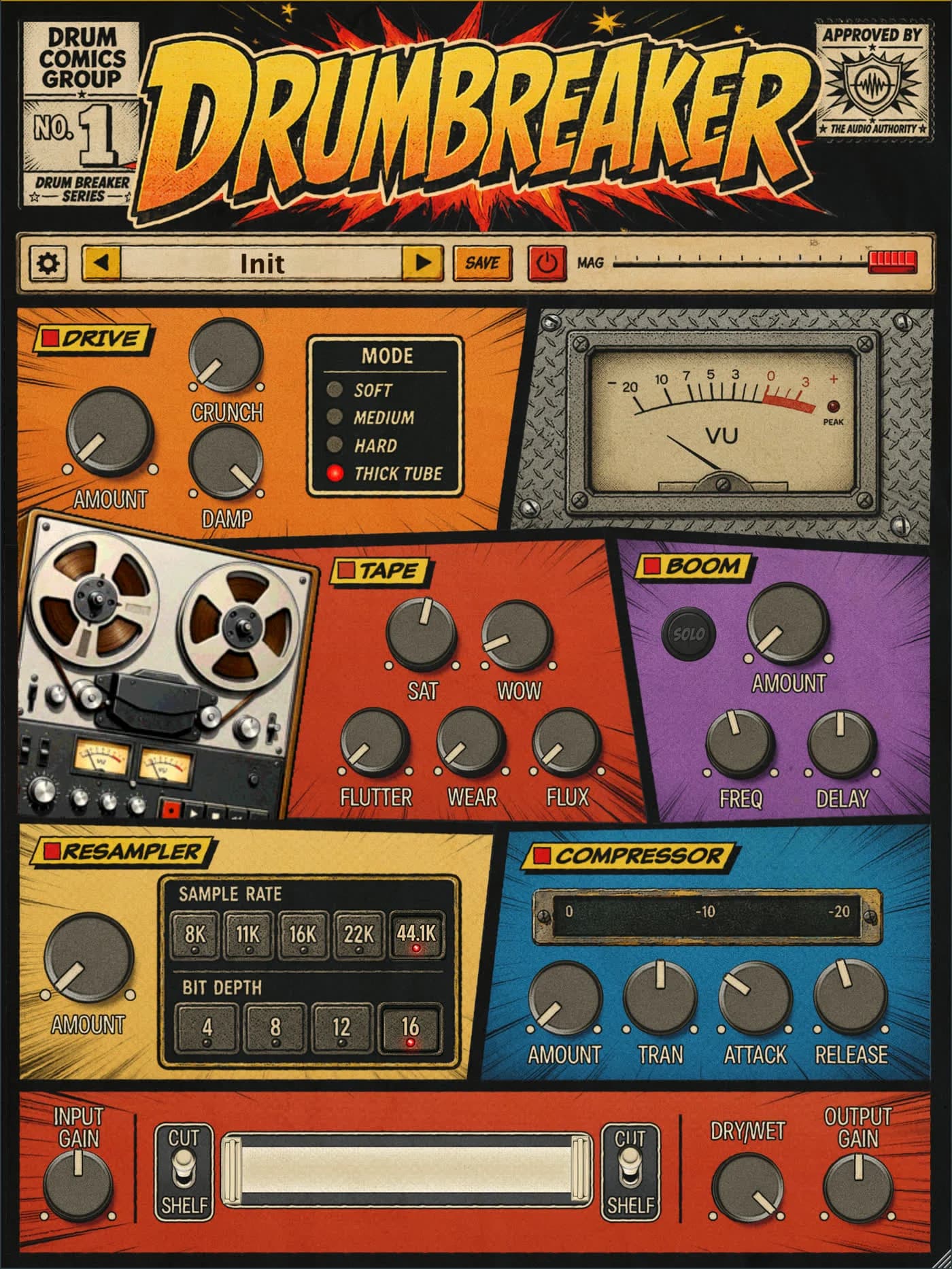
A few quick answers.
Do I need old hardware?
No. Good samples, volume choices and a groove you like are a better place to start.
How much swing should I use?
Enough to make you nod your head without making the rhythm feel late. Try a little and compare.
Why does it sound dull instead of dusty?
You may have softened too much of the snare or hats. Bring back some of the original sound.