
First move. Choose the sound you want first. Warmer, rougher, or more even? You do not need to learn the maths to hear the difference.
Jump to a fix
Want softer edges? Try tape.
Tape effects can soften sharp edges and add a little movement. They can be useful when the drums feel too clean or stiff.

Want more bite? Try tube drive.
Drive adds distortion. A little can make a snare feel thicker or a bass line easier to hear. Too much can make hats sound scratchy.
You may see the word Saturation. It usually means a gentler kind of distortion.
Wild hits jumping out? Try a clipper.
A clipper trims the loudest parts of the sound. A little can help with a kick or snare that is much louder than the rest.
Too much can flatten the hit or add a crunchy sound. Stop and compare as you turn it up.
Start with what bothers you.
Want a worn sound?
Start with Tape.
Want more bite?
Try a little Drive.
One hit keeps jumping out?
Turn that sound down first. Then try a clipper if needed.
Don’t let extra volume win the argument.
An effect often makes the sound louder. Turn its output down before judging it against the original.
Keep it if you prefer the sound. Leave it off if you do not. There is no rule that every beat needs extra dirt.
You’re done when...
0 of 3 checked on your own beat.
Try it on your drums
Grit. Warmth. Punch.
Hear what Drum Breaker does, then try it in your own beat.
Meet Drum Breaker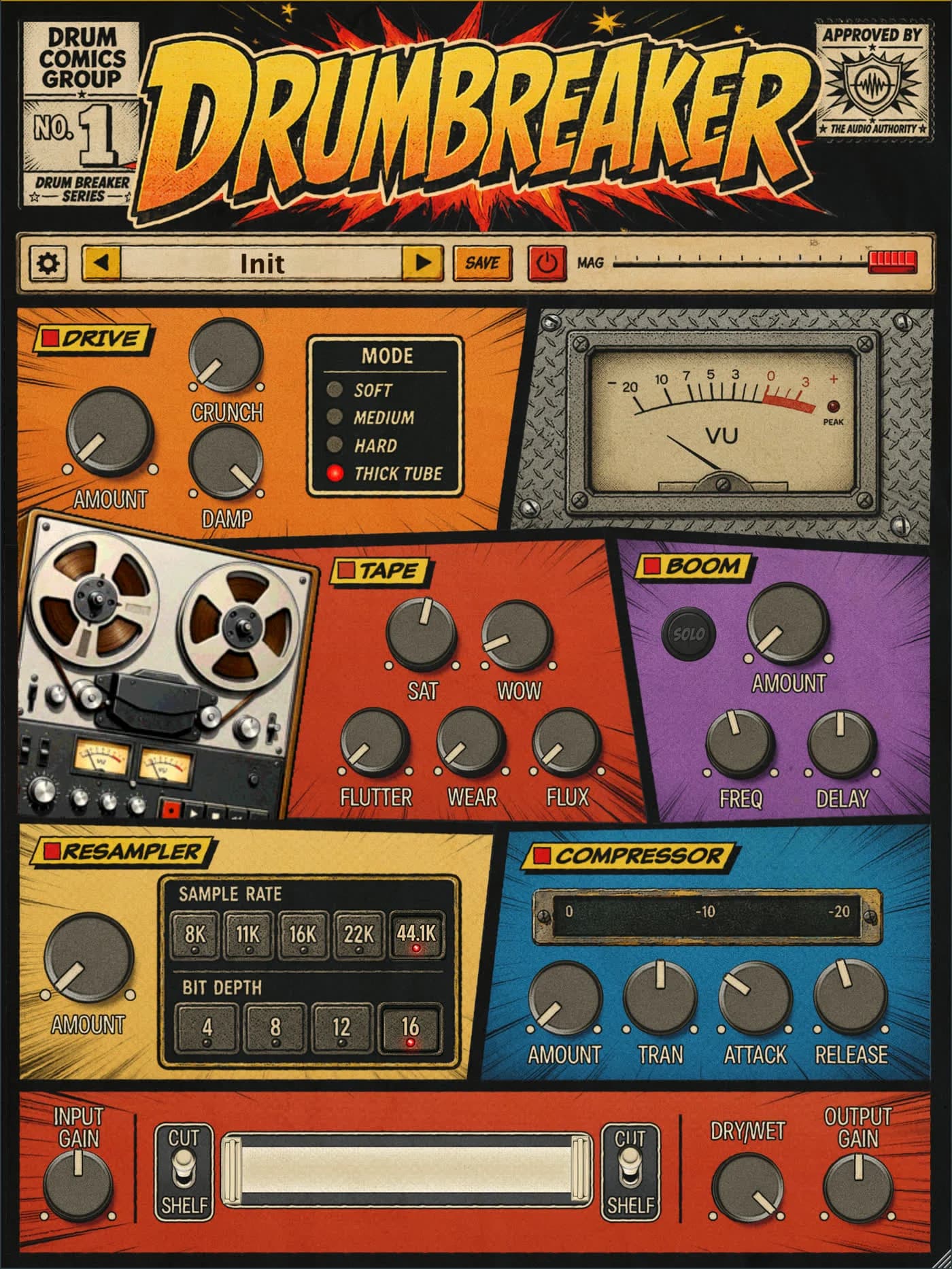
A few quick answers.
What does saturation mean?
A kind of distortion that can make a sound feel warmer, thicker or rougher.
Is clipping always bad?
Not always. A clipper is an effect you can use on purpose. But unwanted crackling from turning everything up too far usually means you should lower the levels.
Should I use all three?
No. Start with one and listen. You may not need anything else.